
Lab grown diamond prices 2026
He’d been checking the same ring for four months, waiting for a “good enough” reason to finally buy it.
Then he saw the price. Not slightly lower — noticeably lower. Enough that he sat back in his chair and thought, wait, did I miss something?
Lab grown diamond prices 2026 turned out to be the reason. He’d walked into the middle of one of the biggest price shifts the diamond industry has seen in years.
Why Everyone’s Suddenly Talking About Lab-Grown Diamond Prices
If you’ve priced a lab-grown recently Lab grown diamond prices 2026and it felt cheaper than you remembered, you’re not imagining it.
Lab grown diamond prices in 2026 have fallen dramatically compared to just a few years ago — and the shift has been sharp enough that buyers, jewellers, and even natural diamond sellers are all reacting to it.
This isn’t a small dip. It’s a structural change in how lab grown diamond prices 2026 are set, and understanding why it happened matters more than just knowing that it did.
Why Lab Grown Diamond Prices 2026 Are Falling
This part isn’t complicated, even if the numbers look dramatic.
Lab-grown diamond production expanded rapidly over the past several years, particularly through CVD (Chemical Vapor Deposition) facilities scaling up across China and India. As more producers entered the market and manufacturing became more efficient, supply grew faster than demand — and when supply grows faster than demand, prices fall.
Industry price trackers like Edahn Golan’s wholesale index and StoneAlgo have documented this closely. According to that data, wholesale lab-grown diamond prices have declined by roughly 74% to 90% between 2020 and 2026, depending on carat size and quality grade.
It’s simple economics, not a sign that anything is wrong with the diamonds themselves.
Micro Story #1: The Ring That Cost a Third of What He Expected
A man researching engagement rings had budgeted based on prices he’d seen two years earlier.
When he actually got a quote in 2026, the same carat weight and clarity cost roughly a third of what he’d planned for.
He didn’t spend less. He upgraded the carat size instead — and still came in under budget.
How Much Have Lab Grown Diamond Prices 2026 Actually Changed?
The scale of the drop depends heavily on which data source and stone size you’re looking at, but tracking lab grown diamond prices 2026 across independent sources shows a consistent overall pattern.
- Wholesale prices overall: Down roughly 74% to 90% since 2020, according to multiple industry price analysts
- 1-carat rounds: Showing the most price stability recently — some 2026 data even shows a slight uptick for this popular size, suggesting demand has caught up with supply at this specific size
- 1.5 to 2-carat and larger stones: Still falling faster, with some Q2 2026 wholesale data showing declines of 11% to 20% year-over-year for larger sizes
- Rate of decline: Slowing overall — 2025 saw roughly a 26% year-over-year wholesale decline, while more recent 2026 quarterly data shows single-digit to low-double-digit declines, suggesting prices may be approaching a production-cost floor for certified quality stones
The steepest phase of the price collapse appears to be behind us. What’s happening now looks more like a market finding its floor than a market in freefall.
Does Lower Price Mean Lower Quality?
This is the question that quietly worries a lot of buyers, and it’s worth answering honestly.
No — lower prices reflect supply and manufacturing economics, not a change in the diamond itself.
A lab-grown diamond’s quality is still determined by the same 4Cs used for natural diamonds: cut, color, clarity, and carat. A well-cut, well-certified lab-grown diamond today is physically and optically the same as one sold five years ago at a much higher price — it’s simply less expensive to produce now than it used to be.
That said, quality variation between individual stones is real, regardless of price trends. This is exactly why certification matters more, not less, in a market where prices are shifting quickly.
Lab-Grown vs Natural Diamond — Price Comparison
Understanding where lab-grown and natural diamonds actually stand today helps put lab grown diamond prices 2026 in context against the natural diamond market.
| Lab-Grown Diamonds | Natural Diamonds | |
|---|---|---|
| Price trend since 2020 | Down ~74–90% | Down modestly, roughly 20–30% from 2022 highs |
| Price vs. equivalent natural stone (2026) | Roughly 85–90% less expensive per carat | Baseline comparison |
| Supply | Rapidly expanding | Naturally limited |
| Typical resale retention | Lower, often a small fraction of purchase price | Generally higher, though still well below retail |
| Certification available | Yes — IGI, GIA, and others | Yes — IGI, GIA, and others |
Neither option is inherently the “smarter” choice — the right one depends on what you’re prioritizing: size and design flexibility, budget, or long-term resale expectations.
Micro Story #2: The Sister Who Almost Didn’t Buy the Necklace
A woman had been eyeing a lab-grown diamond tennis necklace for over a year, always telling herself she’d wait for “one more sale.”
When her sister pointed out the price had already dropped significantly without any sale at all, she finally understood: waiting for a discount on something already discounted by the market didn’t make sense anymore.
She bought it the next week. She still wears it almost daily.
Should You Buy Now, or Wait? What Lab Grown Diamond Prices 2026 Suggest
This is the question everyone actually wants answered, and it deserves an honest, non-hyped response.
The steepest declines appear to be slowing. Recent quarterly data for certified, standard sizes — particularly 1-carat stones — shows prices stabilizing rather than continuing to collapse. Larger stones (2 carats and above) still show more room for further softening, since they’ve historically carried higher wholesale margins.
This means:
- If you’re buying a standard 1-carat stone, current prices may already be close to a practical floor — waiting further may not save you much
- If you’re buying a larger stone, there may still be modest further softening, though the pace of decline has slowed considerably compared to 2022–2024
- If you’re buying primarily for resale value, it’s worth knowing upfront that lab-grown diamonds currently retain a relatively small percentage of purchase price on resale — this is a realistic expectation, not a flaw specific to any one brand or seller
No one can promise you the “perfect” moment to buy. But looking at lab grown diamond prices 2026 quarter over quarter, the days of prices falling 20–30% every year appear to be behind the market for certified, standard-size stones.
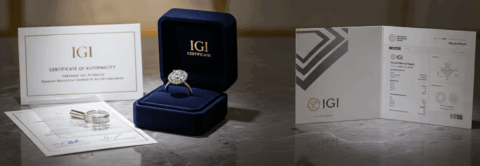
What to Check Before Buying an IGI-Certified Lab-Grown Diamond
Certification becomes more important, not less, in a market where prices have moved this fast.
Before buying, check:
- Which lab certified the stone — IGI and GIA are the most widely recognized names for lab-grown diamond grading
- The full 4Cs breakdown — cut, color, clarity, and carat, documented in the certificate itself
- Cut grade specifically — this affects brilliance more than almost any other factor, and it’s easy to overlook when focused on price
- Whether the certificate matches the physical stone — reputable sellers make this easy to verify
- Total price transparency — understand what you’re paying for the stone itself versus setting, metal, and craftsmanship
A falling price environment rewards buyers who compare carefully — not because sellers are dishonest, but because price alone no longer tells you much about value.
Why Bigger Carat Diamonds Are Becoming More Accessible
One of the most meaningful effects of falling lab grown diamond prices 2026 has nothing to do with saving money — it’s about what becomes possible.
A carat size that once required a significant budget stretch is now within reach for many buyers. Larger center stones, which previously carried steep wholesale premiums, have seen some of the sharpest price declines of any category.
This has real design implications: bolder solitaire rings, larger tennis bracelet stones, statement pendant pieces — designs that once felt purely aspirational are now genuinely attainable for a wider range of buyers.
Micro Story #3: The Upgrade Nobody Expected
A customer originally planning to buy a 0.75-carat solitaire found, after comparing 2026 pricing, that a full 1-carat stone fit comfortably within the same budget.
She hadn’t asked for an upgrade. The market had simply shifted underneath her while she was still deciding.
“I almost didn’t check the current pricing again,” she said. “I’m glad I did.”
Best Lab-Grown Diamond Jewelry for Everyday Wear
With lab grown diamond prices 2026 more accessible than in previous years, everyday lab-grown diamond jewellery has become a realistic category, not just an occasion purchase.
Pieces well suited to daily wear include:
- Stud earrings — low-profile, durable, and versatile across outfits
- Thin diamond tennis bracelets — accessible now at carat weights that once felt out of reach
- Simple solitaire pendants — a single stone that works from casual to formal settings
- Comfort-fit solitaire rings — for those who want a diamond to wear without reserving it for special occasions
The falling price environment has genuinely expanded what “everyday diamond jewellery” can mean for a lot of buyers.
Nievaa Jewels’ Approach to Lab-Grown Diamonds
Understanding a fast-moving lab grown diamond prices 2026 environment is only useful if it leads somewhere practical.
Nievaa Jewels works with both lab-grown and natural diamonds, with certification information provided per piece so buyers know exactly what they’re purchasing — not just a price, but a documented stone.
Rather than chasing the lowest possible price point, the focus stays on matching buyers with pieces that fit their actual priorities: whether that’s carat size, design, budget, or long-term expectations around resale.
If falling lab grown diamond prices 2026 have made a certain carat size or design newly realistic for you, that’s worth exploring properly — with full certification details, not just a number on a price tag.
Why This Matters to You, Personally
If you’ve been waiting for the “right time” to buy a lab-grown diamond, this shift in lab grown diamond prices 2026 is worth paying attention to — not because it guarantees savings forever, but because the environment has genuinely changed.
Whether you’re planning an engagement ring, upgrading a piece you’ve wanted for years, or finally buying something for yourself, understanding why prices moved the way they did puts you in a much stronger position than simply reacting to a number.
How to Make the Right Decision
Step 1: Know what size and quality you actually want — not just what fits an old budget. Falling lab grown diamond prices 2026 may mean your original plan is now more flexible than you assumed.
Step 2: Always request certification (IGI or GIA) and review the full 4Cs. Price trends don’t replace due diligence on the individual stone.
Step 3: Be realistic about resale if that matters to you. Lab-grown diamonds currently retain a smaller percentage of purchase price on resale than natural diamonds — plan accordingly rather than assuming otherwise.
Step 4: Compare 1-carat pricing versus larger stones before deciding. Within current lab grown diamond prices 2026, standard sizes have stabilized more than larger stones, which may still see further softening.
Step 5: Choose based on what the piece means to you, not just the trend line. Price context should inform your decision — it shouldn’t be the only thing driving it.
FAQs
1. Will lab diamond prices keep dropping? Recent 2026 data on lab grown diamond prices 2026 shows the rate of decline slowing significantly for standard sizes like 1-carat stones, suggesting prices may be approaching a production-cost floor. Larger stones may still see some further softening.
2. Does lower price mean lower quality in lab-grown diamonds? No. Price declines reflect expanded production and manufacturing efficiency, not a change in diamond quality. Individual stone quality still depends on cut, color, clarity, and carat, which is why certification remains essential.
3. Are lab-grown diamonds a good investment in 2026? Lab-grown diamonds are generally not considered a strong investment vehicle, as they currently retain a relatively small percentage of purchase price on resale. They’re better approached as a purchase for beauty and personal meaning rather than financial appreciation.
4. What should I check before buying an IGI-certified lab-grown diamond? Verify the certifying lab, review the full 4Cs on the certificate, confirm the certificate matches the physical stone, and understand pricing breakdown between the stone and the setting.
5. Is now a good time to buy a lab-grown diamond? Looking at lab grown diamond prices 2026 for standard sizes like 1-carat stones, prices appear to have largely stabilized, meaning waiting further may not yield significant additional savings. For larger stones, some further softening is possible, though at a slower pace than in previous years.
6. Why are lab-grown diamond prices falling faster for larger stones? Larger stones historically carried higher wholesale margins, making them more exposed as supply increased and buyers became more price-sensitive.
7. How much cheaper are lab-grown diamonds than natural diamonds in 2026? Based on current lab grown diamond prices 2026, estimates suggest lab-grown diamonds are roughly 85% to 90% less expensive per carat than comparable natural diamonds, though this varies by size and quality grade.
8. Should I buy a lab-grown diamond for an engagement ring given falling prices? It can be a strong choice for buyers prioritizing size, design flexibility, and budget. Just go in with realistic expectations around resale value, and always confirm certification before purchasing.
Conclusion
Prices move. Markets shift. But what you’re actually choosing — a piece that means something, worn on the days that matter — doesn’t change with a wholesale index.
If falling prices have made something you’ve wanted finally feel possible, that’s worth taking seriously.
Some things are worth finding at the right moment. This might be one of them.